Take the First Step Toward Energy Control
Build Large-Scale Energy Capacity With Solar Farm Installation in Chula Vista, CA
Large properties, infrastructure developments, municipalities, utilities, and industrial operators often need more than rooftop solar to support significant energy goals. Solar farm installation in Chula Vista, CA, provides a way to develop large-scale generation systems that use open land for high-capacity solar production and long-term energy infrastructure.
A utility-scale solar project involves far more than placing panels across available acreage. Site conditions, environmental requirements, topography, grading, drainage, equipment access, electrical distribution, interconnection, structural systems, and future maintenance all affect how the project should be designed.
Battery Energy Storage Systems can also be incorporated into large solar projects to store generated electricity and deploy it when needed. Combining solar generation with BESS can support grid flexibility, improve energy availability, and create more control over when generated power is released.
Utility-scale solar installation may serve communities, industrial facilities, public agencies, utilities, and developers planning megawatt-scale energy assets. The scope can include land evaluation, system engineering, equipment planning, civil construction, electrical infrastructure, utility coordination, and monitoring.
A solar farm should be planned around the characteristics of the site and the requirements of the energy system it will support. Soil conditions, available acreage, access roads, equipment clearances, transmission or distribution infrastructure, and interconnection requirements all need to work together.
Solar farm installation creates a long-term energy asset from available land. When paired with battery energy storage systems, the project can support both power generation and controlled energy deployment as part of a larger infrastructure strategy.
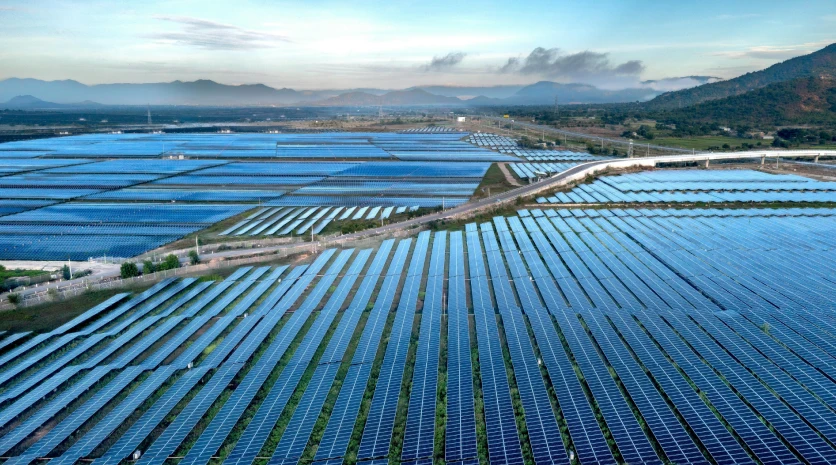
Plan Utility-Scale Solar Around Land, Grid Access, and Energy Demand
Utility-scale solar begins with understanding whether the site can support a large energy project. Available acreage alone does not determine suitability. The land must also be evaluated for topography, soil conditions, environmental restrictions, drainage patterns, existing infrastructure, access, shading, and proximity to electrical interconnection points.
A relatively flat site may simplify some parts of construction, while uneven terrain can require more extensive grading or a mounting approach designed around elevation changes. Topographical planning helps determine array placement, equipment areas, road locations, drainage paths, and other essential site features.
Soil conditions are also important because solar farm construction may require thousands of structural support points across the property. Ground characteristics can influence pile design, foundation requirements, installation methods, and equipment selection.
Environmental assessments may be necessary before major site work begins. Depending on the property and project scope, planning can involve habitat considerations, stormwater requirements, erosion control, drainage, vegetation, and other environmental factors.
Access is another critical consideration. Construction vehicles, material deliveries, maintenance crews, emergency personnel, and utility equipment all need suitable routes through the site. Internal roads and equipment areas should be incorporated into the layout before installation begins.
Utility-scale solar installation also depends on electrical access. The project needs a viable path for generated electricity to reach the grid or designated facility. Interconnection planning examines available electrical infrastructure, required equipment, voltage levels, system capacity, and the point where the project will connect.
The desired generation capacity helps shape the overall design. A project intended to produce several megawatts of power requires a different array layout, inverter configuration, electrical collection system, and interconnection design than a smaller distributed-energy project.
Solar module placement should also account for sunlight exposure, row spacing, equipment access, and shading between arrays. Fixed-tilt and tracking configurations may have different land-use and structural requirements, depending on the intended project design.
Utility-scale solar projects may include centralized or distributed inverter equipment, transformers, switchgear, collection circuits, communications equipment, monitoring systems, and other electrical infrastructure. Each component has to be coordinated as part of the overall generation system.
Long-term maintenance should be considered during early design. Array spacing, road access, vegetation management, equipment locations, and drainage can affect how easily crews can inspect and service the site after commissioning.
Solar farm installation therefore starts with more than panel selection. Land conditions, electrical access, energy goals, environmental requirements, and future operations all need to be evaluated together before construction can move forward effectively.
Integrate Battery Energy Storage Systems With Large-Scale Solar Generation
Solar generation changes throughout the day because panel output depends on sunlight. Battery energy storage systems provide a way to capture electricity and make some of that stored energy available at a later time.
For utility-scale applications, battery storage may be designed at substantial capacity to support large energy systems. Grid-scale battery storage can hold electricity produced during periods of stronger solar generation and release it according to the operating strategy of the project.
This ability to shift energy across time can help large-scale energy infrastructure respond more flexibly to changing demand. Instead of relying only on immediate solar production, stored electricity can be deployed when the project requires it, subject to battery capacity and system configuration.
A commercial BESS or utility-scale energy storage system requires detailed electrical planning. Battery capacity, power output, charging rates, discharge rates, thermal management, controls, communications, protection systems, and grid interaction all affect the final design.
Battery equipment must also be located appropriately. Large storage systems may use containerized equipment or other dedicated enclosures positioned within specific areas of the site. Equipment spacing, access routes, environmental exposure, drainage, and applicable safety requirements all influence placement.
The electrical connection between the solar array and storage system also needs careful design. Depending on the project architecture, solar generation and battery storage may share parts of the electrical infrastructure or use separate conversion and control equipment before connecting to the broader system.
Control systems play a major role in battery operation. Monitoring and energy management equipment can track state of charge, charging activity, discharge behavior, system temperatures, power flow, and other operating conditions.
Solar and battery storage systems can also support infrastructure projects where energy use changes throughout the day. Industrial operators, municipalities, utilities, and developers may need stored energy for different reasons, including load management, grid support, or coordination with renewable generation.
System sizing should be based on specific operating goals. A larger storage capacity is not automatically more suitable. The amount of storage should reflect how much electricity needs to be stored, how quickly it must be delivered, and how long the system is expected to supply power.
BESS installation also requires planning for long-term maintenance. Battery modules, cooling systems, electrical equipment, monitoring hardware, and communication systems all need suitable access for inspection and service.
Utility-scale battery storage becomes most useful when it is treated as part of the full energy system rather than as separate equipment. Solar generation, storage capacity, electrical distribution, controls, and grid connection should be planned together so each component supports the intended operating strategy.
Coordinate Solar Farm Construction From Civil Work Through Interconnection
Solar farm construction involves a sequence of civil, structural, electrical, and utility-related work that must be coordinated carefully across a large site.
The process generally begins after site evaluation, engineering, and required approvals are completed. Surveying and layout work establish array locations, access roads, equipment pads, drainage areas, electrical routes, and other project boundaries.
Civil construction may include grading, road preparation, erosion controls, drainage improvements, fencing, and clearing where required. These activities prepare the site for structural and electrical installation while maintaining appropriate access for construction equipment.
Structural installation follows the approved array layout. Support piles or other foundations are installed before racking systems and solar modules are placed. Alignment and spacing matter because even small inconsistencies can affect large numbers of panels across a utility-scale project.
Electrical infrastructure is installed alongside or after structural work depending on the construction sequence. Underground and above-ground collection circuits carry electricity from array sections toward inverter and transformation equipment.
Inverter stations convert generated electricity into a form suitable for the rest of the electrical system. Transformers, switchgear, protective devices, and collection equipment then support power movement toward the interconnection point.
If the project includes BESS installation, storage equipment is coordinated with the site’s broader electrical layout. Battery enclosures, power conversion systems, transformers, controls, and communication equipment are positioned and connected according to the project design.
Utility interconnection is one of the most important parts of a solar farm EPC project. Generated electricity cannot simply be delivered to the grid without coordination. Interconnection requirements can involve studies, electrical equipment, protection systems, metering, utility review, and final authorization.
Testing and commissioning follow construction. Individual components and larger system sections may be checked to confirm proper electrical performance, communications, protection settings, equipment operation, and monitoring.
Solar farm services also need to consider system visibility after activation. Monitoring platforms can track array output, inverter performance, storage operation, power flow, and other system information across a large site.
Performance data can help identify unusual changes in generation. A reduction in output from one section of the array may point to equipment faults, shading, module damage, wiring issues, inverter problems, or other conditions requiring inspection.
Site maintenance continues after commissioning. Vegetation management, road upkeep, equipment inspections, panel cleaning where necessary, electrical testing, drainage checks, and battery system maintenance can all contribute to long-term operation.
For solar and battery storage systems, ongoing monitoring is especially important because both generation and storage equipment must remain coordinated. Battery state of charge, thermal conditions, solar output, electrical loads, and interconnection performance may all need to be reviewed.
Utility-scale solar installation brings together many disciplines within a single energy project. Civil work, structural systems, electrical construction, battery storage, controls, monitoring, and grid interconnection must all function as parts of one coordinated facility.
When these elements are planned around the site and the intended generation capacity, solar farm installation can transform suitable land into long-term clean energy infrastructure capable of supporting substantial energy demand.

Plan Smarter Energy Upgrades
Considering solar, storage, EV charging, or electrical improvements? Discuss your property goals with our in-house project team.
Frequently Asked Questions About Solar Farm & BESS
-
Suitable sites may include large open properties with adequate sunlight, workable terrain, electrical interconnection access, suitable soil conditions, and space for required equipment.
-
BESS stands for Battery Energy Storage System. It stores electricity for later deployment based on the capacity and operating strategy of the energy project.
-
Yes. Utility-scale battery storage can be integrated with solar generation when the electrical design, storage capacity, controls, and interconnection are planned together.
-
Work can include surveying, civil preparation, foundations, racking, solar modules, electrical collection systems, inverters, transformers, storage equipment, monitoring, and interconnection.
-
Grid connection requires electrical design, utility coordination, interconnection studies or reviews where applicable, protection equipment, metering, testing, and final authorization.