Take the First Step Toward Energy Control
Keep Panels Producing With Solar Panel Cleaning Services in Chula Vista, CA
Solar panels depend on direct sunlight to produce electricity, which means surface buildup can interfere with how much light reaches the cells. Solar panel cleaning services in Chula Vista, CA, help remove dust, debris, bird droppings, pollen, and other contaminants that collect on exposed panel surfaces over time.
Rooftop solar panels are continuously exposed to outdoor conditions. Wind can carry dust and dirt onto the array, while birds, nearby trees, construction activity, and seasonal weather can contribute additional buildup. Even when panels still appear operational, layers of debris may reduce sunlight exposure and affect energy production.
Professional solar panel cleaning uses methods intended to remove this buildup without damaging the equipment. Purified water systems and non-abrasive brushing can help clean panel surfaces while avoiding harsh chemicals and high-pressure washing that may affect seals, coatings, or surrounding components.
Solar panel cleaning service needs can vary depending on the property. A system near heavy traffic, open soil, trees, construction zones, or areas with frequent bird activity may collect debris more quickly than a system in a cleaner environment. Panel angle and roof conditions can also affect how easily dust and residue wash away naturally.
Routine solar system cleaning can help maintain clearer panel surfaces and make it easier to monitor physical condition. Cleaning may also reveal cracked modules, loose hardware, damaged wiring, or other visible concerns that warrant further inspection.
The purpose of solar panel cleaning is simple: keep the energy-capturing surface clear enough to receive sunlight effectively while protecting the equipment from unnecessary cleaning-related damage.
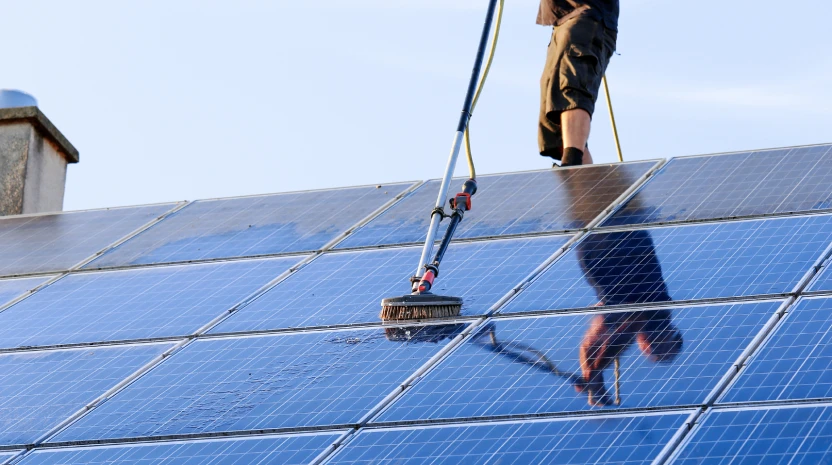
Remove Dust, Debris, and Buildup Without Damaging Solar Panels
Solar panels are designed for outdoor use, but that does not mean every cleaning method is appropriate. Improper washing can create avoidable risks, particularly when strong chemicals, abrasive tools, or high-pressure equipment are used on sensitive surfaces.
Professional solar panel cleaning should focus on removing buildup while protecting the panel glass, coatings, seals, frames, wiring, and mounting equipment. Non-abrasive tools are important because scratches or surface damage can affect appearance and may interfere with long-term panel condition.
Purified water systems are often useful for solar panel maintenance cleaning because they help reduce mineral residue. Standard tap water can contain dissolved minerals that may leave spots or deposits behind after drying, especially in areas with harder water.
Dust is one of the most common forms of buildup. Fine particles can settle across the panel surface and create a film that becomes more noticeable over time. Windy conditions, dry weather, nearby roads, and construction activity can increase the amount of dust reaching rooftop solar panels.
Bird droppings can be more difficult to remove because they may adhere strongly to the glass and block specific areas of a module. Unlike a light dust layer, concentrated debris can create isolated areas where sunlight is significantly reduced.
Leaves, pollen, ash, and other organic material may also collect around panel edges or in low points on the array. These materials can hold moisture and create additional buildup if they remain in place for extended periods.
Solar array cleaning should also account for panel angle. Steeper arrays may shed some dirt more easily during rainfall, while flatter installations can retain more residue. Rain alone may not remove oils, bird droppings, mineral deposits, or heavy dust.
Cleaning crews should also be mindful of roof safety and electrical equipment. Solar panels produce electricity whenever exposed to sunlight, so care is required around wiring, connectors, junction boxes, and other system components.
High-pressure washing should generally be avoided because concentrated water force can affect seals, connections, or surrounding roofing materials. Harsh cleaning chemicals should also be avoided when they are not approved for use on solar modules.
A controlled cleaning process helps remove buildup while reducing unnecessary stress on the system. The goal is not simply to make the panels look clean. It is to clear the sunlight-receiving surface using methods suited to solar equipment.
Routine solar panel cleaning can also create an opportunity to observe the condition of the array. Visible cracks, chipped glass, loose clamps, exposed wiring, or unusual discoloration may indicate a separate maintenance concern that should be addressed.
Careful cleaning supports both panel condition and energy production. By removing buildup without introducing new damage, property owners can maintain a cleaner solar surface and preserve the equipment’s ability to capture sunlight effectively.
Support Solar Production With a Cleaning Schedule Based on Site Conditions
There is no single cleaning schedule that fits every solar installation. The frequency of solar panel cleaning depends on the environment, panel orientation, local weather, nearby activity, and the amount of debris that reaches the array.
Properties near highways or busy roads may experience more airborne dust. Homes near trees can collect pollen, leaves, and organic residue. Commercial sites near construction, warehouses, open lots, or industrial activity may see heavier particle buildup.
Bird activity can also influence cleaning frequency. Panels located near nesting or roosting areas may collect droppings more often, while systems with minimal bird traffic may remain cleaner for longer periods.
Seasonal conditions matter as well. Extended dry periods can allow dust to accumulate without rainfall to remove loose material. Wind can carry soil and debris onto the panels, while certain seasons may bring more pollen or vegetation residue.
Solar panel cleaning services should therefore be based on visible condition and performance rather than an arbitrary schedule. Monitoring system output can help property owners notice when production changes in a way that may be related to surface buildup.
A gradual reduction in output does not always mean panels need cleaning, since solar production naturally changes with weather and seasonal sunlight. However, unusually dirty panels combined with lower-than-expected output can be a reason to consider cleaning and further evaluation.
Residential solar panel cleaning may involve relatively small rooftop arrays, but access conditions can vary widely. Roof slope, height, panel placement, and surrounding obstacles all affect how the work should be approached.
Commercial solar panel cleaning can involve much larger arrays. Warehouses, offices, retail properties, and other commercial buildings may have hundreds of modules, making an organized cleaning plan more important.
Large arrays may also experience uneven buildup. Panels near roof edges, vents, nearby trees, or bird activity may become dirtier than other sections. A system-wide review can help identify where cleaning is most needed.
Panel orientation can influence how quickly debris collects. Tilted panels may shed loose dust more easily, while low-slope arrays may retain more residue. Drainage patterns across the panel glass can also leave streaks or deposits in certain areas.
Routine rooftop solar panel cleaning can support long-term monitoring because a clean surface makes physical damage easier to spot. Cracks, chips, discoloration, and other visible changes can be more difficult to identify when panels are covered in heavy dirt.
Cleaning should also be coordinated with other solar maintenance when appropriate. If a system has recently shown electrical faults, inverter errors, or unexplained production loss, cleaning alone may not resolve the issue. In those cases, cleaning and technical inspection serve different purposes.
Professional solar panel cleaning supports the physical condition of the modules, while electrical diagnostics address faults within the system. Understanding that distinction helps property owners avoid assuming that every production issue is caused by dirt.
A site-specific cleaning approach helps balance maintenance with actual need. Panels should be cleaned when buildup is significant enough to justify attention, using methods that protect the equipment while restoring a clearer path for sunlight.
Use Solar Panel Cleaning as Part of Long-Term System Care
Solar panels are built to remain outdoors for many years, but long-term performance still benefits from regular attention. Solar panel cleaning can be one part of a broader maintenance approach that includes monitoring, inspections, and timely repair.
A clean panel surface allows sunlight to reach the solar cells with fewer physical obstructions. Dust, bird droppings, pollen, and other debris can reduce the amount of light reaching portions of the module, particularly when buildup becomes heavy or concentrated.
Regular cleaning can also help owners better evaluate the physical condition of the system. After dirt is removed, visible issues such as cracked glass, frame damage, loose hardware, or unusual surface marks may be easier to identify.
Solar system cleaning should not be treated as a substitute for electrical maintenance. A clean array can still have inverter faults, wiring problems, damaged connectors, or communication errors. Cleaning addresses surface contamination, while system diagnostics address electrical and equipment concerns.
Monitoring can help connect these maintenance activities. If output improves after significant buildup is removed, the cleaning likely addressed part of the issue. If performance remains low, additional inspection may be needed.
Solar panel cleaning service can also be useful after unusual environmental events. Heavy dust, nearby construction, wildfire ash, bird activity, or landscaping work may leave more residue than normal.
Commercial systems may require more structured planning because cleaning hundreds of panels can involve access coordination, roof safety, equipment movement, and scheduling around facility operations. Cleaning plans should account for these conditions rather than disrupting normal property use unnecessarily.
Residential systems also benefit from safe access planning. Roof work carries fall risks, and panels may be located near electrical components or difficult roof areas. Property owners should avoid risky cleaning practices that could cause injury or damage.
The cleaning process should protect surrounding roofing materials as well. Aggressive scrubbing, heavy equipment, or excessive water use can create problems unrelated to the solar panels themselves.
Non-abrasive brushing and purified water provide a more controlled approach for removing common debris. The goal is to loosen and rinse away buildup without creating scratches, mineral spotting, or unnecessary stress on the equipment.
Panel temperature should also be considered. Solar modules can become very hot under direct sunlight, and abrupt exposure to cold water may place thermal stress on the glass. Cleaning conditions should be selected with equipment protection in mind.
Routine solar panel cleaning can support energy production by keeping surfaces clearer, but the benefits depend on how dirty the panels were before cleaning. A lightly dusty array may show little change, while a system with heavier buildup may benefit more noticeably.
Long-term solar care works most effectively when cleaning, performance monitoring, inspections, and repairs are treated as separate but connected tasks. Each plays a different role in keeping the system in suitable operating condition.
Solar panel cleaning services provide a focused way to remove environmental buildup and maintain clear energy-capturing surfaces. When performed with the right methods and at an appropriate frequency, cleaning can support steady solar production without exposing the equipment to unnecessary damage.

Plan Smarter Energy Upgrades
Considering solar, storage, EV charging, or electrical improvements? Discuss your property goals with our in-house project team.
Frequently Asked Questions About Solar Panel Cleaning
-
Cleaning frequency depends on dust, bird activity, nearby trees, construction, panel angle, weather, and other site conditions. Panels should be evaluated based on actual buildup.
-
Rain can remove some loose dust, but it may not remove bird droppings, heavy residue, mineral deposits, or other material that has adhered to the panel surface.
-
High-pressure washing should be avoided because excessive force may affect seals, electrical components, coatings, or surrounding roofing materials.
-
Cleaning can use purified water systems and non-abrasive brushes to remove debris while reducing the risk of scratches, residue, or equipment damage.
-
No. Cleaning addresses surface buildup. Inverter faults, wiring problems, damaged equipment, and other electrical issues may require separate inspection and repair.